Why Slab Leaks Are So Common in Arizona
Most Arizona homes are built slab-on-grade: a concrete foundation poured directly on the ground, with water supply lines running underneath or through it. That design is efficient for the desert, but it puts the pipes in a tough spot.
Expansive clay soils across much of the Phoenix and Tucson metros swell when wet and shrink when dry. Monsoon storms, irrigation and drought cycles keep that soil moving, flexing the slab and the pipes beneath it. Where the soil contains caliche (a cement-hard layer of calcium carbonate), copper pipe can abrade where it rubs against the hard layer or the concrete.
Arizona’s hard water adds chemistry to the mechanics. Mineral-rich water and high water temperatures in summer contribute to pinhole leaks in copper, especially on the hot-water side, which is why so many slab leaks show up first as a warm spot on the floor.
Spot Repair vs. Reroute vs. Repipe
There are three standard ways to fix a slab leak, and the right one depends on the age of your plumbing and how many leaks you’ve had.
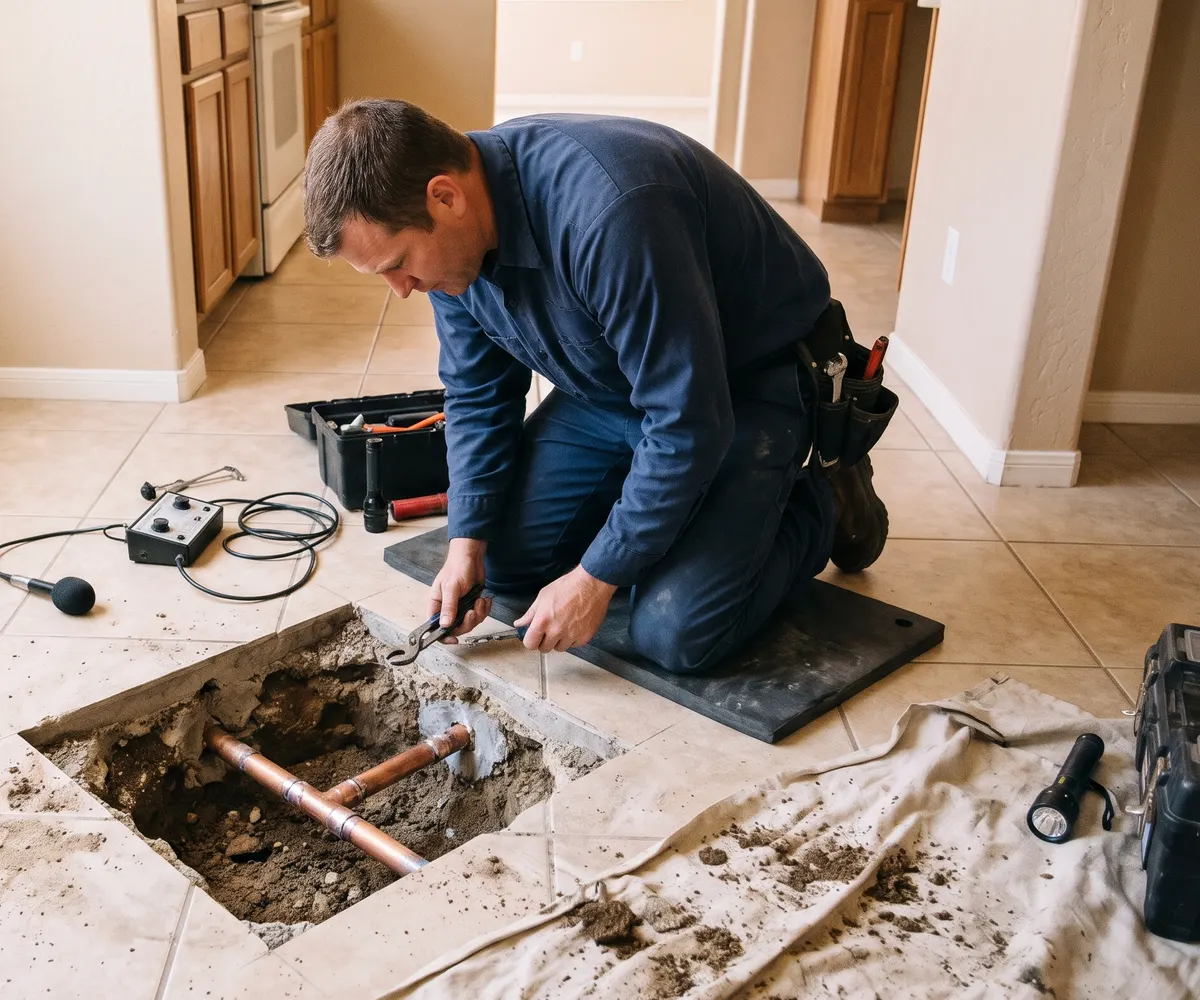
- Spot repair: open the slab directly above the leak, fix the pipe, and patch the concrete. Best for a single leak in otherwise healthy pipe.
- Reroute: abandon the leaking line under the slab and run a new line through the attic or walls. The most popular fix in Arizona, since it removes the pipe from the soil entirely.
- Repipe: replace all supply lines in the house. The long-term answer for homes on their second or third slab leak.
Whichever route you choose, the plumber should give you a written diagnosis showing where the leak was found. You’ll need it for insurance.